
Ayurvedic consultation and Nadi Pariksha in Rishikesh
A consultation at Divine School of Ayurveda in Muni Ki Reti, Rishikesh costs $20, in person or online, with Dr. Mukesh Sharma or Dr. Vibha Sharma, BAMS doctors practising since 1990. In person it includes Nadi Pariksha, the Ayurvedic pulse examination, read together with your history and any medical reports you bring. You leave with a plain answer: diet and routine advice, herbal medicines, a treatment plan, or the advice that you do not need treatment.
- Price
- $20
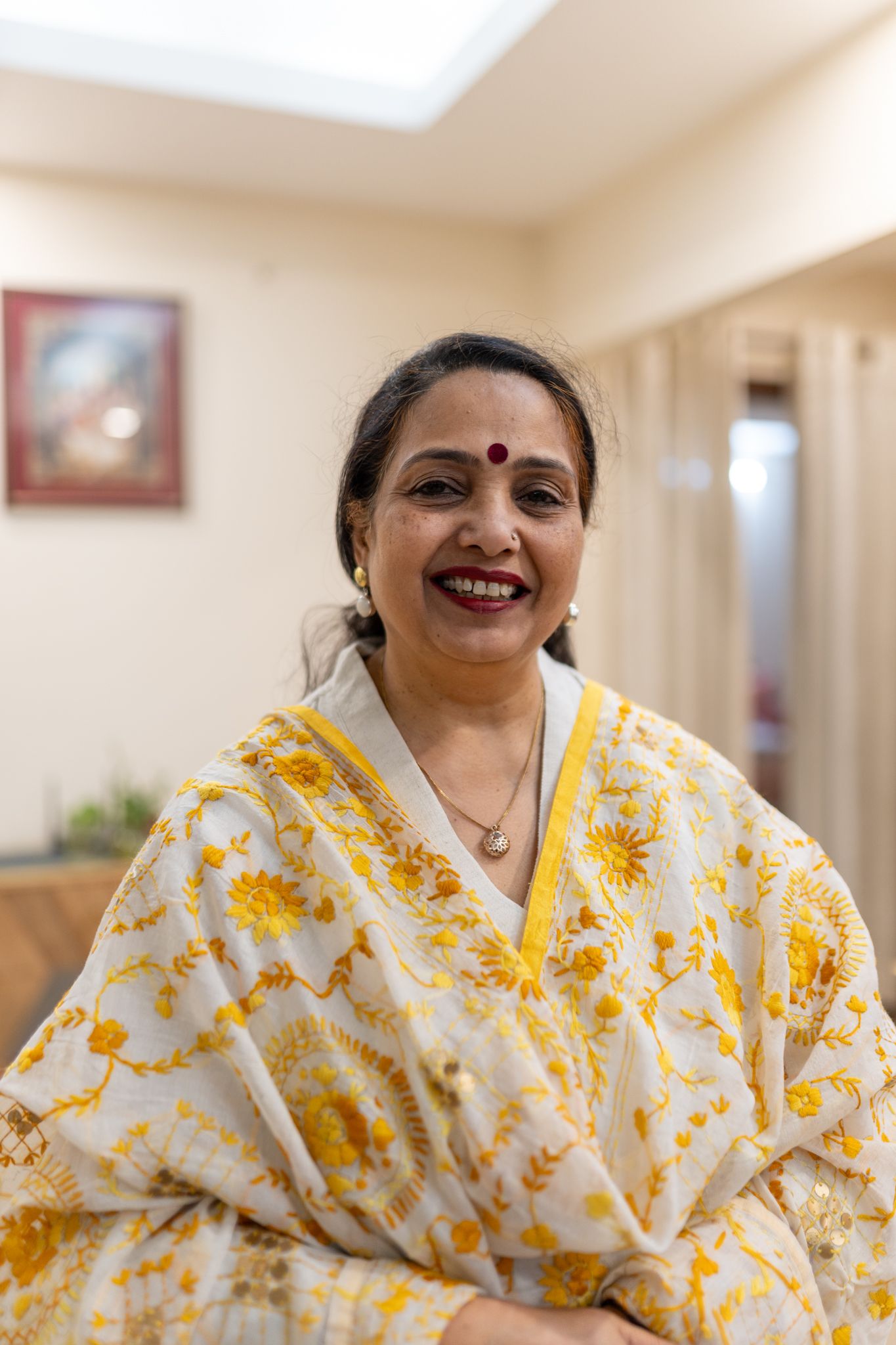
Every treatment at the clinic starts here. Whether you want a single therapy, a Panchakarma program or simply an opinion on a long-standing problem, the first step is a conversation with one of the two doctors.
Who you will see
You will see Dr. Mukesh Sharma or Dr. Vibha Sharma. Both hold a BAMS degree from Maharshi Dayanand University, Rohtak, have practised since 1990, and have run the clinic in Rishikesh since 2015.
They are registered Ayush practitioners. In India, Ayurvedic practice is regulated by the National Commission for Indian System of Medicine, and asking any practitioner for their registration is normal. Consultations are in English and Hindi. You can read more about both doctors on the about page.
What happens in the consultation
The consultation is mostly listening. The doctors take a long history, look at your reports and examine you, and only then make a recommendation.
A first consultation usually covers:
- What brought you here. Your main complaint, how long it has been going on, what you have tried and what other doctors have said.
- Your daily life. Food and meal times, digestion, sleep, stress, work and exercise.
- Your reports and medicines. Blood tests, scans and prescriptions. Bring them, on paper or on your phone.
- Examination. In person, this includes Nadi Pariksha, along with the tongue, eyes, skin and a general examination.
- A plain answer. What the doctors think is going on in Ayurvedic terms, and what they suggest.
Nadi Pariksha: what the pulse can and cannot tell
Nadi Pariksha is the Ayurvedic examination of the pulse at the wrist. It helps the doctor judge your constitution and current imbalance; it does not diagnose diseases.
The doctor places three fingers on the radial artery just below the thumb and feels the movement, speed and strength of the pulse. A 2019 review of traditional and modern Nadi Pariksha describes how the three finger positions are traditionally associated with vata, pitta and kapha, and notes that the method is subjective and depends heavily on the skill of the physician.
That is the honest limit. A study of 15 Ayurvedic doctors examining the same volunteers found agreement ranging from poor to moderate, with more experienced doctors agreeing more often. The pulse cannot tell you your blood sugar, thyroid levels, liver enzymes or blood pressure as a number, and it cannot find a tumour or a gallstone. Those need lab tests and scans.
So at the clinic, the pulse is one input among several. The doctors read it together with your history and your reports, and if something needs a blood test or a specialist, they will tell you. Our guide to what Nadi Pariksha can and can’t tell you goes into the research in more detail.
Online or in person
Both cost $20. In person includes the pulse examination; online works from your history, your reports and what the doctors can see over video.
| In person | Online | |
|---|---|---|
| Fee | $20 | $20 |
| Nadi Pariksha | Included | Not possible over video |
| Physical examination | Yes | Limited to what can be seen on camera |
| Best for | Anyone in Rishikesh, or before starting a program | Planning a program before you travel, or follow-up after you leave |
Many international patients consult online first, so the doctors can say whether a program is worthwhile and how long it should be before anyone books flights. The pulse is then read when you arrive.
What you leave with
You leave with a clear recommendation and a reason for it. That might be:
- Diet and daily routine changes suited to your constitution, kept practical for the place you actually live
- Herbal medicines, with instructions on how to take them
- A single therapy such as abhyanga or Shirodhara
- A treatment program such as Panchakarma, with a suggested length
- Advice to get a test or see a specialist first
- The honest answer that you do not need treatment
Treatment is recommended only when the doctors expect it to help. If you are taking prescribed medicines, keep taking them; the US National Center for Complementary and Integrative Health advises telling all your health care providers about any complementary approaches you use, and not using Ayurveda to delay seeing a conventional doctor about a medical problem.
For examples of how the doctors approach specific problems, see gut and digestion and lifestyle disorders.
How to prepare
Come rested, ideally in the morning before eating or about three hours after a meal. Avoid a bath, an oil massage or exercise just before, so the pulse is easier to read.
Drink water normally and keep taking your regular medicines. Bring your reports and a list of everything you take, including supplements. If you are planning a massage or Shirodhara the same day, have the consultation first.
How to book
Walk in any day between 10:00 and 20:00 IST at C-6 Ganga Vatika Retreat, near Palm Bliss Hotel, Muni Ki Reti. For a fixed time or an online consultation, use the consultation form or message the clinic on WhatsApp. Directions are on the contact page, and program prices are on programs and pricing.
Questions people ask
At Divine School of Ayurveda in Muni Ki Reti, Rishikesh, a consultation costs $20, online or in person. In person it includes Nadi Pariksha, the Ayurvedic pulse examination. If the doctors recommend a treatment program afterwards, that costs around $120 a day including therapies, herbal medicines, Ayurvedic meals, daily doctor supervision and GST, with accommodation separate.
Yes. Dr. Mukesh Sharma and Dr. Vibha Sharma consult online over video for the same $20 fee, in English or Hindi. An online consultation relies on your history, your reports and what the doctors can observe, because the pulse cannot be read over video. Many international patients start online and have Nadi Pariksha when they arrive in Rishikesh.
Nadi Pariksha is a clinical skill, not a measuring instrument, and studies have found that agreement between doctors ranges from poor to moderate, with experienced doctors agreeing more often. It helps the doctor assess your constitution and current imbalance. It does not detect specific diseases and does not replace blood tests or scans, which is why the doctors read it together with your history and reports.
Yes, drink water normally. Being very thirsty or very hungry makes the pulse harder to read. What to avoid just before is a full meal, a bath, an oil massage or exercise. Morning on an empty stomach, or about three hours after a meal, is considered best, and keep taking your regular medicines.