
What Nadi Pariksha can and can't tell you
Nadi Pariksha is Ayurvedic pulse examination: the doctor reads the pulse at the wrist with three fingers to assess your constitution and the current state of vata, pitta and kapha. It informs the assessment alongside a detailed history, a physical examination and your medical reports; it does not detect specific diseases and does not replace blood tests or scans. At Divine School of Ayurveda in Rishikesh, it is part of every in-person consultation, which costs $20.
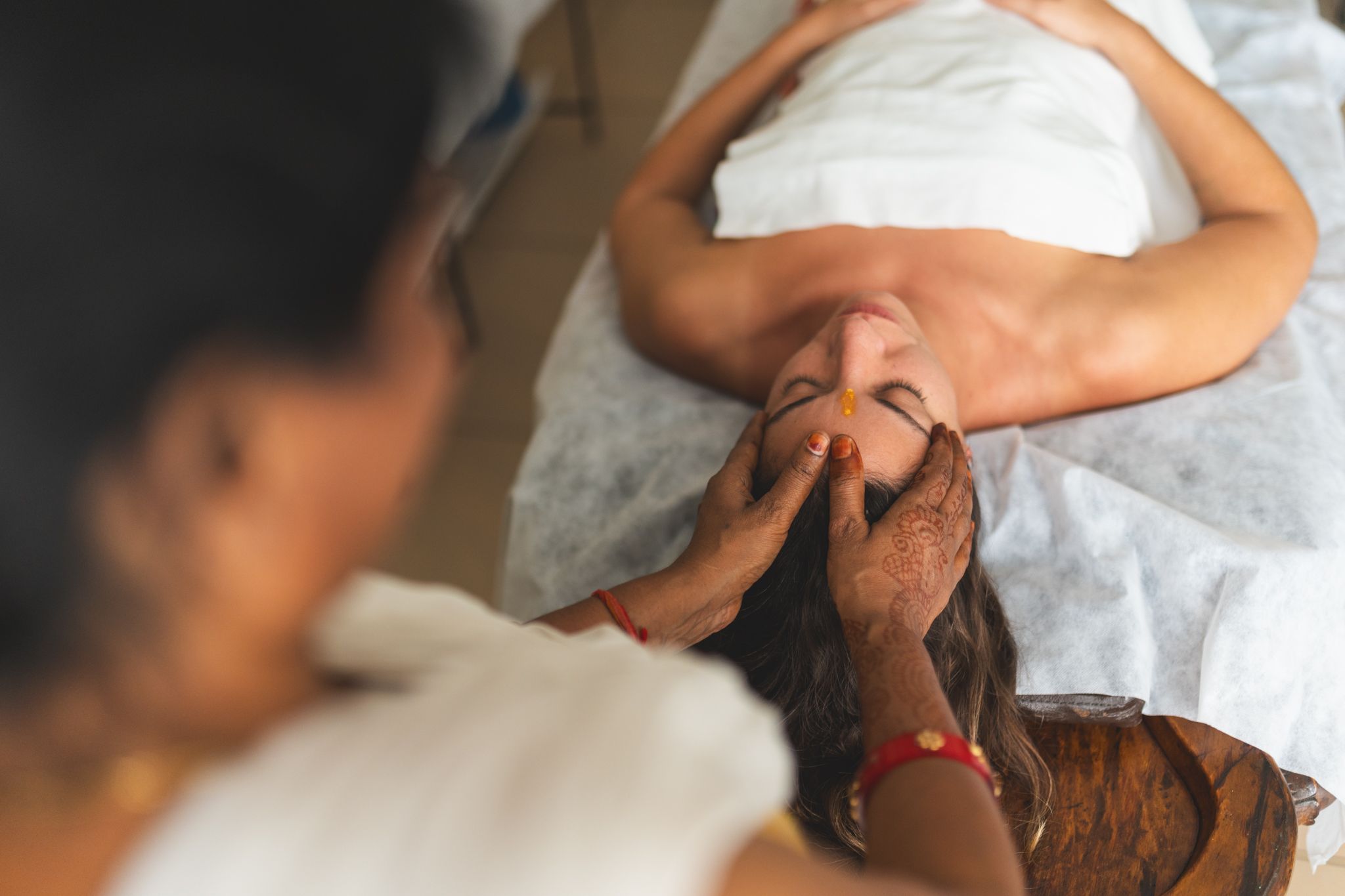
Many people arrive in Rishikesh having heard that an Ayurvedic doctor can “read everything” from the pulse. That is not how the doctors at this clinic describe it, and it is not what the research supports. Nadi Pariksha is a real and useful clinical skill with clear limits. This guide explains both.
What Nadi Pariksha is
Nadi Pariksha is the Ayurvedic examination of the pulse, usually at the wrist. It is one of eight classical methods of examining a patient, alongside the urine, stool, tongue, speech, skin, eyes and face.
That eightfold examination, known as Ashtavidha Pariksha, is described in later classical texts such as the Yogaratnakara, and is summarised in a 2024 review in the Journal of Ayurveda and Integrative Medicine. In other words, the pulse was never meant to be read on its own. It sits inside a wider examination.
How it is done
The doctor places three fingers, the index, middle and ring finger, on the radial artery at the wrist. According to a 2019 review of traditional and modern Nadi Pariksha, the classical texts associate the position under the index finger with vata, the middle finger with pitta and the ring finger with kapha. The doctor feels for qualities such as the pulse’s movement (gati), speed (vega), steadiness and the hardness of the artery.
Classical texts describe reading the right wrist in men and the left wrist in women. The examination itself takes a few minutes. The consultation around it takes much longer.
What it can tell the doctor
Nadi Pariksha helps the doctor form a view of your constitution (prakriti) and the current state of imbalance (vikriti): which doshas are dominant and how your body is responding right now. That view shapes diet, routine, herbal medicines and whether therapies make sense.
Used well, it adds information a questionnaire cannot. A patient may describe “tiredness”, and the pulse, the tongue and the history together help the doctor judge what kind of tiredness it is in Ayurvedic terms, and therefore what to change. The texts also describe how the pulse shifts with emotion, hunger and recent food, which is why the doctor reads it in context rather than as a fixed number.
What it can’t tell you
Nadi Pariksha does not diagnose diseases, does not measure blood sugar, cholesterol, thyroid hormones or blood counts, and does not replace a scan or a biopsy. If someone tells you they have found a specific disease from your pulse alone, treat that as a warning sign.
Some things the pulse simply cannot show:
- Lab values. HbA1c, liver enzymes, kidney function and hormone levels need blood tests.
- Structural problems. Gallstones, fibroids, a narrowed artery or a tumour need imaging.
- Blood pressure as a number. That needs a cuff.
- Infections and their cause. These need clinical testing.
- Whether a treatment is working at a biochemical level. That needs repeat tests over time.
This is why the doctors ask patients with long-standing conditions to bring recent reports. If you have digestive complaints, alarm symptoms such as bleeding or unexplained weight loss need proper investigation first, and no pulse reading changes that.
What the research says about reliability
Studies of Ayurvedic pulse examination show that it is a skill that varies with the practitioner. Agreement between doctors has ranged from poor to moderate, and more experienced doctors agree more often.
The clearest data come from a group of studies by Kurande and colleagues:
| Study | What was tested | Result |
|---|---|---|
| Repeatability study, 2012 | One expert doctor read the pulse of 17 healthy people twice, blinded | “Moderate” agreement for pulse diagnosis (weighted kappa 0.42) and “substantial” for body constitution (0.65) |
| Intrarater and interrater study, 2013 | 15 registered Ayurvedic doctors examined 20 healthy volunteers twice, 600 examinations in all | Reliability from poor to moderate; agreement was higher for more experienced doctors |
| Overview of reliability studies, 2013 | Review of how Ayurvedic diagnosis has been tested | Reliability research in Ayurveda is at a preliminary stage |
The authors’ own conclusion from the 2013 study was that experience and proper training play an important role in pulse examination. The 2019 review linked above says plainly that Nadi Pariksha is subjective and highly dependent on the skill of the physician. Researchers are now building pressure sensors to record the same pulse features, but these remain research tools.
None of this makes the pulse worthless. It means it should be used the way any clinical skill is used: by a trained doctor, cross-checked against everything else they know about you.
How it fits into a consultation
At Divine School of Ayurveda, Nadi Pariksha is one part of a longer consultation that includes your history, current symptoms, medicines, food, sleep, and any reports you bring. The pulse adds to that picture; it does not override it.
A first consultation at the clinic in Muni Ki Reti typically covers:
- Your history. What brought you here, how long it has been going on, what you have tried, and what other doctors have said.
- Your daily life. Food and meal timing, digestion, sleep, stress, work and exercise.
- Your reports and medicines. Blood tests, scans and prescriptions, including anything from your regular doctor.
- Examination. Nadi Pariksha, along with the tongue, eyes, skin and general examination.
- A plain answer. Diet and routine changes, herbal medicines, a treatment program, or the honest advice that you do not need one.
Dr. Mukesh Sharma and Dr. Vibha Sharma have practised since 1990 and consult in English and Hindi. You can read more about them on the about page.
Online consultations
Online consultations work without the pulse. Over video, the doctors rely on the history, your reports and what they can observe, and they are clear about what that can and cannot cover. Many international patients start online and have the pulse examined when they arrive in Rishikesh.
How to prepare for Nadi Pariksha
Come rested, ideally in the morning before eating or about three hours after a meal, and avoid a bath, an oil massage or exercise just before. Drink water normally, and keep taking your regular medicines.
The guidance in the classical literature, summarised in the 2024 review and the IJERT paper linked above, is mostly about avoiding things that temporarily change the pulse:
- Not straight after a meal, a bath or an oil massage
- Not while very hungry or thirsty
- Not after exercise or rushing to the appointment
- Sitting quietly for a few minutes first, with the arm relaxed and slightly bent
Never stop a prescribed medicine for a pulse reading. Bring a list of what you take, and bring your recent reports, printed or on your phone.
What it costs here
At Divine School of Ayurveda, Nadi Pariksha is part of the $20 in-person consultation; there is no separate charge. The consultation is how the doctors decide whether you need treatment at all.
If treatment is recommended, programs cost around $120 a day, including therapies, herbal medicines, meals, daily doctor supervision and GST; see programs and pricing. If a Panchakarma course comes up, our guides to what Panchakarma costs in Rishikesh and how many days it takes explain what to expect. To book, use the consultation form or message the clinic on WhatsApp.
Questions people ask
Nadi Pariksha is a skilled clinical assessment, not a measuring instrument, and its consistency depends heavily on the doctor's training and experience. Published studies of Ayurvedic pulse examination found agreement ranging from poor to moderate between doctors, and better agreement among more experienced doctors. It is most useful as one part of a full consultation, read together with your history and medical reports.
No. Nadi Pariksha helps an Ayurvedic doctor assess your constitution and the nature of a current imbalance, which guides diet, routine and treatment choices. It does not diagnose diseases such as diabetes, thyroid disorders or cancer, and it does not replace blood tests, imaging or a biomedical diagnosis. A responsible doctor will ask for those reports, not claim to read them from the pulse.
Classical Ayurvedic texts describe reading the pulse on the right wrist in men and the left wrist in women. The doctor places the index, middle and ring fingers on the radial artery just below the base of the thumb, where the three positions are traditionally associated with vata, pitta and kapha.
Yes, drinking water normally is fine, and the classical guidance actually lists being very hungry or thirsty as states that make the pulse harder to read. What to avoid is a full meal, a bath, an oil massage or exercise just before the examination. Morning on an empty stomach, or about three hours after a meal, is considered best.
Nadi Pariksha is a traditional clinical method that researchers are still working to measure objectively. Studies have tested how consistently doctors read the same pulse, and engineers are developing pulse sensors to record the same features. The honest position is that it is a subjective skill that depends on the practitioner, which is why it should be combined with history-taking and standard medical tests.