
7, 14 or 21 days of Panchakarma: how long do you actually need?
A full Panchakarma course usually takes 10 to 21 days, because it has three phases: preparation with oil and heat, the main cleansing procedure, and a graded return to normal food. Seven days usually suits a shorter therapy course rather than full Panchakarma, while 21 days allows for longer preparation or more than one main procedure. At Divine School of Ayurveda in Rishikesh, the doctors set the length only after a consultation, which costs $20.
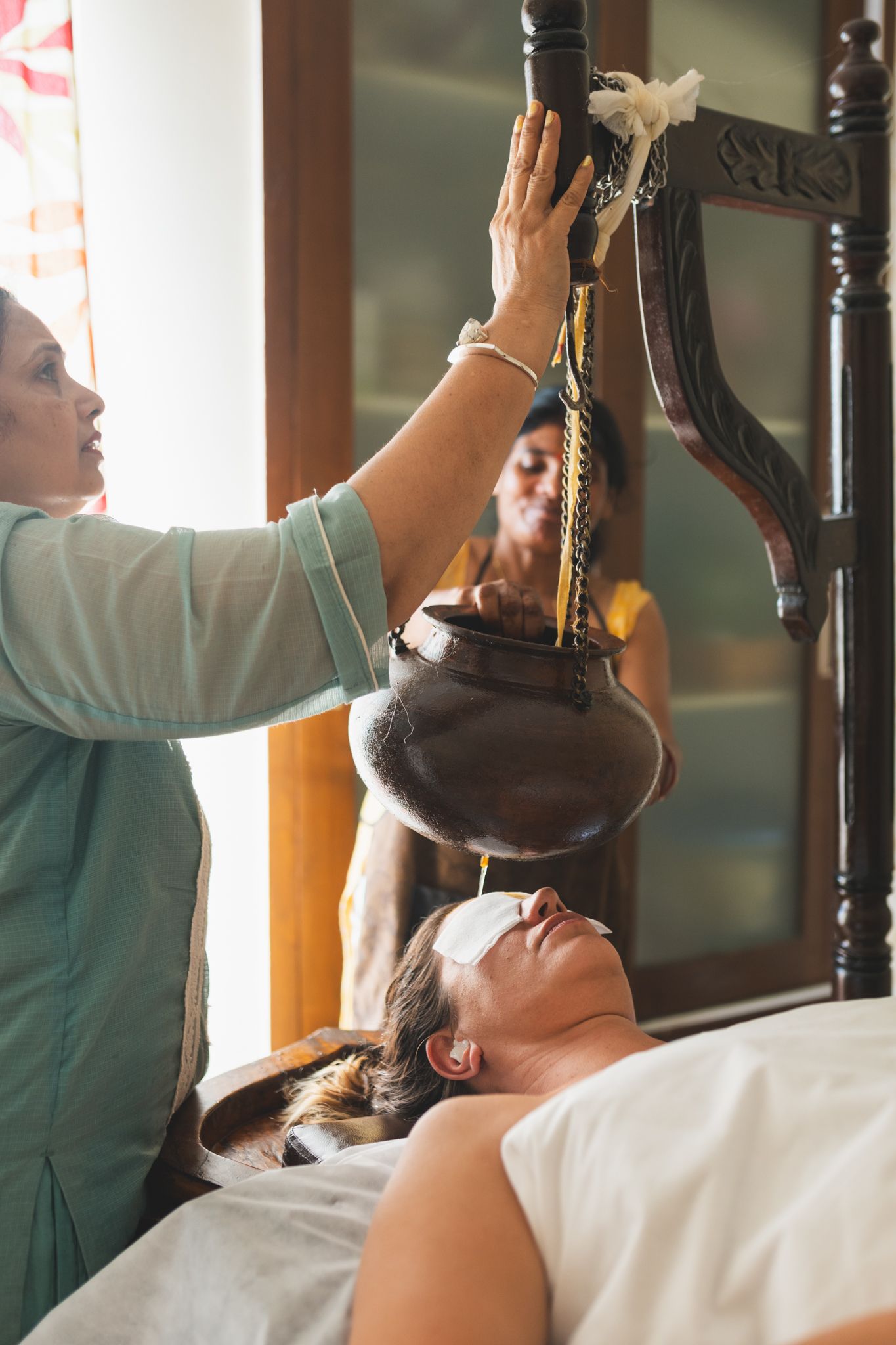
“How many days should I book?” is usually the first practical question, because it decides flights, leave from work and the budget. The short answer is 10 to 21 days for full Panchakarma, but the length is not chosen from a menu. It follows from the three phases of the treatment and from how your body responds to each one.
Why Panchakarma takes more than a few days
Panchakarma is a sequence, not a single session: preparation, the main procedure, and recovery. Each phase has its own minimum length, and they cannot be compressed safely.
The word means “five actions”: therapeutic emesis (vamana), therapeutic purgation (virechana), nasal administration (nasya), and two kinds of medicated enema (niruha and anuvasana basti). The Charak Samhita Research, Training and Development Centre at ITRA, Jamnagar describes these procedures and the preparation and aftercare around them. Most people do not have all five. The doctor chooses the procedures that suit the condition, and the phases around them set the length.
The three phases in plain language
Panchakarma runs in three phases: purvakarma (preparation), pradhanakarma (the main procedure) and paschatkarma (recovery). Preparation and recovery usually take more days than the main procedure itself.
Purvakarma: preparation
In Ayurvedic terms, preparation softens and loosens the body with oil and heat so that the main procedure can work gently. It usually takes 3 to 7 days.
It begins with improving digestion through diet and herbs, then moves to oleation (snehana): taking small, increasing doses of medicated ghee by mouth each morning, and full-body oil massage (abhyanga). Heat therapy (swedana) follows, through herbal steam or heated herbal bundles. A protocol document from the National Institute of Ayurveda, written for children but following the classical sequence, describes internal oleation for 3 to 7 days, or until the signs of adequate oleation appear, followed by a short rest of about 2 to 3 days before purgation. That “until the signs appear” is why nobody can promise an exact day count before seeing you.
Pradhanakarma: the main procedure
This is the cleansing itself, chosen for your condition. Purgation (virechana) is done on a single day. A course of medicated enemas (basti) runs over a series of days.
When the doctor plans more than one main procedure, there are gaps between them. The same NIA document lists, for example, a minimum of 7 days between purgation and a decoction enema, and notes that a complete classical virechana course, including preparation, rest and the diet afterward, takes about 15 days. That is one reason two procedures rarely fit into a week.
Paschatkarma: recovery
After the main procedure, digestion is treated as delicate and food is reintroduced step by step. This graded diet, samsarjana krama, classically lasts 3, 5 or 7 days, depending on how strong the cleansing was.
It starts with thin rice gruel, moves to thicker gruel, then light lentil soup, and finally normal meals. Herbal medicines often continue for some weeks after you leave.
7, 14 or 21 days: what each length usually means
Seven days usually covers a shorter therapy course, 14 days fits one complete Panchakarma course for many people, and 21 days allows for a fuller course. These are typical patterns, not fixed packages.
| Length | What usually fits | Who it tends to suit |
|---|---|---|
| 3 to 7 days | Therapies such as abhyanga, swedana, Shirodhara and potli, with diet and herbs; sometimes preparation only | First visits, shorter trips, maintenance, or when full cleansing is not appropriate |
| 10 to 14 days | Preparation, one main procedure and the graded diet | Many people having a first full Panchakarma course |
| 15 to 21 days | Longer preparation, more than one main procedure with gaps, a complete recovery phase | Long-standing conditions where the doctors plan a fuller course |
At the clinic, treatment programs run from 3 to 21 days, and a full Panchakarma usually takes 10 to 21 days. If you only have a week, the doctors will say so plainly and suggest what a week can usefully do, rather than squeeze a full course into it.
How the doctors decide your length
The doctors decide length after a consultation, based on your condition, your strength, your digestion and how you respond to preparation. They may adjust it by a day or two during the course.
At Divine School of Ayurveda, Dr. Mukesh Sharma and Dr. Vibha Sharma start with a history, your reports and, in person, Nadi Pariksha. They consider:
- What you are treating. A long-standing digestive or metabolic problem may need a fuller course than a seasonal reset. See gut and digestion for how one condition is approached.
- Your strength. Classical guidance requires good strength to withstand the purification procedures. If you are run down, preparation may take longer, or the doctors may advise building strength first.
- Your digestion. Weak digestion lengthens preparation.
- How you respond. The signs of adequate oleation decide when the main procedure happens.
- Your medicines and other conditions. These can change which procedures are suitable at all.
Many international patients start with an online consultation before booking flights, so the length is known in advance. If you then need to change your dates, a day or two of flexibility at either end helps.
What a treatment day looks like
Most treatment days combine a doctor review, one or more therapy sessions, prescribed meals and a lot of rest. The days are quieter than people expect.
A typical day during preparation might look like this:
- Early morning: medicated ghee on an empty stomach (during oleation), then warm water and rest until hungry
- Late morning: a brief review with the doctors, then therapy such as abhyanga followed by steam
- Midday: a light, warm meal set for that stage of the course
- Afternoon: rest, a short walk, reading; no hard exercise and no long sun exposure
- Evening: a light, early dinner and an early night
On the day of a main procedure, you stay close to the clinic and your accommodation, and the doctors monitor you through it. Rooms within walking distance help, which is one reason the clinic can arrange nearby guesthouses.
Recovery after Panchakarma
Plan for a few quiet days after the course ends, eat simply, and follow the diet and herbs the doctors give you. Digestion takes time to return to normal.
- Before you fly: if possible, leave a day or two between the end of the graded diet and a long flight. The NIA protocol notes that when travel during the diet stage is unavoidable, simple light foods can be substituted, so tell the doctors your travel plans in advance.
- First weeks home: keep meals warm, simple and regular. Reintroduce heavy, fried and very cold food gradually.
- Medicines: finish any herbal course you are given, and tell your regular doctor what you took. The US National Center for Complementary and Integrative Health advises telling all your health care providers about any complementary approaches you use.
- Follow-up: report anything unusual to the clinic.
When Panchakarma is not the right choice
Panchakarma is not suitable for everyone, and a shorter, gentler program or care from home is sometimes the better answer. The doctors screen for this before setting any length.
ITRA’s reference on virechana lists conditions in which purgation is not done, including diarrhoea, bleeding, acute fever and acute rhinitis, and people who are elderly, children, pregnant, weak, or excessively thin or obese. The doctors also need to know about heart conditions, recent surgery, uncontrolled blood pressure or blood sugar, and every medicine you take. If you are unwell with an acute illness when you arrive, the course waits.
Planning your stay
Decide your dates after the consultation, not before, and budget for the full length the doctors suggest. At around $120 a day for treatment, meals and GST, 14 days comes to about $1,680 plus accommodation.
Our guide to what Panchakarma costs in Rishikesh breaks down what is included, and programs and pricing has the current summary. A first consultation is $20, online or at the clinic in Muni Ki Reti, and it is where the length of your course is decided.
Questions people ask
A full Panchakarma course usually takes 10 to 21 days. It has three phases: preparation with internal and external oiling and heat, which often takes 3 to 7 days; the main procedure, such as purgation or a course of medicated enemas; and a graded diet afterward that classically lasts 3, 5 or 7 days. The exact length depends on the person and is set by the doctor after assessment.
Seven days is usually enough for a shorter course of therapies such as oil massage, herbal steam and Shirodhara, but often too short for a complete classical Panchakarma with full preparation, a main procedure and the follow-up diet. Some people do have a short course with one procedure. At Divine School of Ayurveda in Rishikesh, the doctors will tell you at the consultation whether 7 days can do what you need.
A 21-day Panchakarma gives time for longer preparation, more than one main procedure with the rest gaps between them, and a complete graded diet before you leave. It suits long-standing conditions where the doctor plans a fuller course. It is not automatically better than 14 days; the right length is the one your assessment supports.
After the main cleansing procedures, classical practice uses a graded diet called samsarjana krama, lasting 3, 5 or 7 days depending on how strong the cleansing was. During that time digestion is treated as fragile, so heavy food, long travel, late nights and hard exercise are best avoided. Plan a few quiet days before a long flight home.
Classical guidance excludes pregnant women, people with acute fever, diarrhoea or bleeding, and people who are weak, very thin, very elderly or children from the main cleansing procedures. People with serious heart conditions, recent surgery or uncontrolled blood pressure or blood sugar need careful assessment first. A doctor should screen you before any course begins.